Getting Your BA (“Beer is Awesome”) Degree

It’s fall, and school’s about to start up again. The kids will be heading back to the classroom, but what will you be doing to educate yourself?
In a Growler web story from June 2024, Certified Cicerone Matt Poirier stressed the importance of beer education—for all beer lovers, not just brewers. Stephen Beaumont, longtime Canadian beer writer and consultant, agrees: “The more you know about anything, the more it opens you up to understanding and, crucially, enjoyment.” Education can help you find your “beer epiphany”—that moment a new flavour or concept unfurls for you.
As a Certified Cicerone and beer judge, I agree. Recognizing the need for education is the first step; the next is finding the right path. Fortunately, Canada offers multiple ways to learn and even earn certifications. Sharpen your pencils, raise your tasting glass, and get ready to learn.
Cicerone
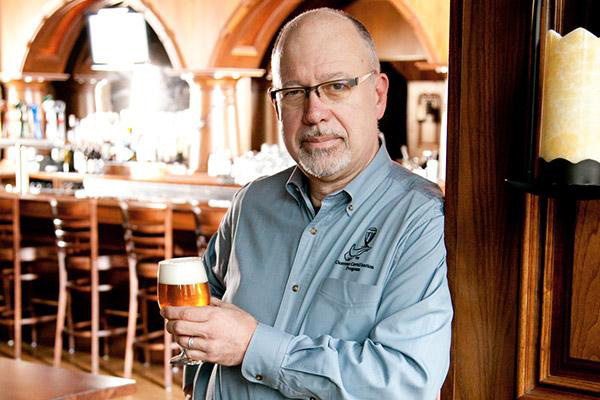
The Italian word “Cicerone” translates to “guide.” A Certified Cicerone is like a sommelier for beer, leading people through understanding and tasting. According to the program’s website, it “has become the industry standard for identifying those with significant knowledge and professional skills in beer sales and service.”
When Ray Daniels established Cicerone in 2008, he wanted a beer credential equivalent to a wine sommelier designation. “I had become aware of just how often bars and restaurants knew utterly nothing about the beer they served—or how to care for it,” Daniels explained in a 2021 interview with Brewer World. “From this, the idea of a ‘beer sommelier’ emerged.”
Cicerone has four levels: Certified Beer Server, Certified Cicerone, Advanced Cicerone, and Master Cicerone—the last being the rarest and most demanding. If you’re just starting out, Level 1 (Certified Beer Server) is a great entry point, covering brewing basics, beer styles, storage, and service. Many breweries encourage their staff to get this certification to improve customer service and beer handling.
Cicerone is primarily a certification, not a full curriculum. “I wasn’t prepared to design a beer school,” Daniels has said. “I set up a certification standard that would give everyone a goal to shoot for.” However, there are now optional online study modules and other resources.
For more structured study, Advanced Cicerone Chris Cohen offers The Beer Scholar, an online prep program for multiple levels of Cicerone certification. Having completed Cohen’s course, I can vouch for its value—the exams are challenging, so a study plan and tasting partner are invaluable.
WSET Awards in Beer

The Wine and Spirit Education Trust (WSET), founded in 1969, historically focused on wine, but thanks to beer expert Mirella Amato, beer is now part of the curriculum.
Amato—Master Cicerone, BJCP Grand Master Judge, Doemens Beer Sommelier, and founder of Beerology Inc.—knew early on that she wanted to write about craft beer. While classmates drank macro lagers, she was discovering more complex flavours. Hungry to learn, she followed a self-taught path using the BJCP style guidelines, starting a study group, and eventually taking judging exams.
By 2012, Amato had become Canada’s only Master Cicerone and only the fifth person worldwide to achieve the title. “The advantage I had,” she recalls, “was that the exam was exactly what I was doing at the time in terms of beer education.”
When WSET invited her to consult on beer education, she was ready. She is now Senior Business Development Manager for Beer and the primary designer of WSET’s beer program, which launched in February 2024.
Level 1 is a six-hour course for beginners or professionals learning to communicate with the public. Level 2 offers deeper exploration of brewing, beer styles, and service. Level 3, still in development, will introduce sensory evaluation. Courses are available online and in person in Vancouver, Calgary, Toronto, and Ottawa, with an instructor available for guidance.
WSET prioritizes consistent, high-quality teaching across all locations. For a shorter taste of Amato’s teaching, her online course Mastering Beer and Food Pairing offers self-paced learning with personal feedback at Beerology.ca.
Prud’homme

In the early 2000s, Roger Mittag was developing beer education programs for Labatt but wanted to reach a wider audience. Inspired by Germany’s Doemens Academy Beer Sommelier program, he launched Prud’homme in 2009, naming it after Louis Prud’homme, Canada’s first licensed brewer.
Mittag drew on existing models like Doemens and Cicerone but kept a focus on education over certification. “I didn’t want to reinvent the wheel,” he says. “But I wanted to offer education, not just certification.”
Prud’homme has grown from one classroom course to a four-level program—Beer Enthusiast, Beer Specialist, Beer Sommelier, and Master Beer Sommelier—offered both in person and online. Depending on the level, courses run from 30 days to 15 weeks and cover beer and food pairing, service, sensory training, brewing, and styles, with practice tests and a PDF workbook.
Mittag aims to keep Prud’homme accessible, with a less technical approach than WSET, Cicerone, or BJCP. “It’s about giving people the information they need to participate in the beer industry without getting too technical.” The program also includes Canadian beer history.
Beer Judge Certification Program (BJCP)

The BJCP, founded in 1985, focuses exclusively on beer judging. It’s designed for those with technical brewing knowledge and a refined palate—there’s no emphasis on service or food pairing.
Its style guidelines are globally recognized. After passing an online, open-book entrance exam, candidates can take the tasting exam to become a Recognized or Certified Judge. Higher ranks—National, Master, and Grand Master—require better scores and more experience points from judging competitions.
Fred Mullner, now Grand Master III, calls the written exam “brutally difficult—more challenging than my engineering qualifications.” But he values the process: “It is amazing how much you can learn just sitting across from another knowledgeable judge and discussing a beer.”
Competitions, says Beaumont, help brewers fine-tune their beers with constructive feedback. Mullner adds: “When a ranked judge scores a beer and gives feedback, the brewer can walk away knowing they’ve had an honest evaluation done by a knowledgeable judge in good faith.”
If you’re curious, start with the $10 online entrance exam and volunteer as a steward at competitions to learn and make connections.
Beer and Brewing at Post-Secondary Institutions
In addition to certifications, Canadian colleges and universities offer beer education:
Kwantlen Polytechnic University: Diploma in Brewing and Brewery Operations, established with help from brewing veteran Nancy More, has trained many respected BC brewers.
Niagara College: Brewmaster and Brewery Operations Management Program, plus a semester-long History of Beer and Brewing course taught by industry advocate Ren Navarro.
George Brown College: Beer Specialist Certificate by Jordan St. John, divided into three courses: Beer 1 (styles and tasting), Beer 2 (ingredients and brewing), and Beer 3 (beer and food pairing). You can take these in person or online—but with an engaging instructor like St. John, I’d recommend in person if you can swing it!
Final Pour
Whatever course or certification you choose, make sure it inspires you, challenges you, and brings you joy. If you can, find a friend to share the journey—tastings and study sessions are more fun together. Beer is about pleasure and connection; your beer education should make you love it even more.